
How To Stop Comparing Yourself To Others And Find True Motivation?
Contents
When you were a child, maybe your parents would compare you to your siblings or other classmates. Something along the lines of “Why couldn’t you perform as good as he did on the test?”
Maybe you noticed someone else at work being efficient with their work in a way that you haven’t quite figured out yet. Maybe you’ve just been browsing social media, and seeing all these people travel the world, eat exotic foods, and live lavish lives is making you wonder where you went wrong.
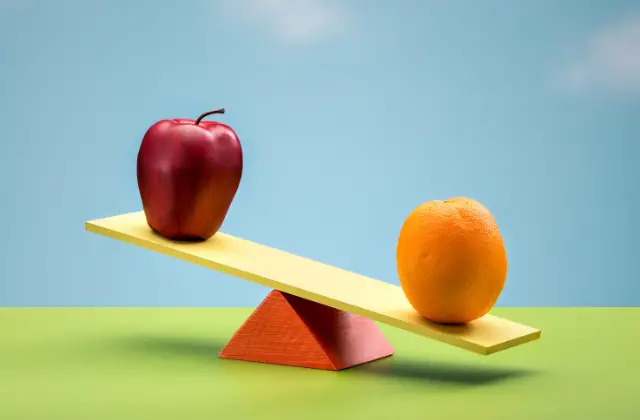
Comparison is the thief of joy, and in this article, we’re going to explore why we do it and how we can reframe our minds.
Why Do We Compare Ourselves To Others?
As humans, we are social animals. We’ve always lived in groups, and comparing ourselves to others among us serves as a way to see how we measure up in a group, and whether or not we need to bring about some change to improve our performance or position.
Psychologist Leon Festinger’s social comparison theory, published in 1954, holds that when we’re unsure of our opinions or abilities, we compare ourselves with others to evaluate where we stand.
Researchers who built on Festinger’s work describe two directions of comparison:
- Upward Comparison: You compare yourself to people you perceive to be better than you
- Downward Comparison: You compare yourself to people you perceive to be worse than you.
With Upward comparison, we can gauge what we might need to do to improve our own social standing, while with downward comparison, we often feel better about ourselves and appreciate where we are. Research shows that either direction can lift or lower your mood, depending on how you read it.
What’s The Problem With Comparison Thoughts?
We’ve established that comparing ourselves with others is a very basic, human instinct. That said, it can be quite harmful. Quite often, when we compare ourselves to others, we tend to minimize ourselves while maximizing others.
This leads to negative effects on our self-image, self-esteem, and motivation. Eventually, you may even fall into the “comparison trap”, which is a vicious cycle in which people frequently compare themselves to others, leading to feelings of low self-esteem, loneliness, and more comparisons.
Frequent negative comparison has been linked with mental health problems such as anxiety, depression, and disordered eating, especially among teens.

How Has Social Media Influenced Comparison?
With apps like Instagram, you always want your followers to see the highs of your life. You’ll post pictures and stories of parties you go to, major life events like graduations, purchasing a car, getting married, and so on.
You may follow a few hundred people, so every time you open the app, you’ll get to see a barrage of posts of what seems like people living their best life. Day after day, you’ll continue to see people leading exciting, fulfilling lives, and then the doubt sets in: why isn’t my life like that?
This is the beginning of the problem. Everything you see on social media is curated, even your own posts. You aren’t showing anyone the lows or the regular monotony of your life, so why would they?
But as you scroll, you won’t think of that. You’ll simply see people living in expensive houses, driving flashy cars, and you’ll compare your life to theirs.
The comparisons don’t just end with possessions.
Social media can also feed body image concerns. Young men may develop unrealistic views of what a healthy physique looks like from fitness models whose whole careers center on their bodies.
Teenage girls can come away dissatisfied with their bodies after seeing models and influencers whose looks often rely on makeup, filters, and sometimes surgery.
If you want a structured way to notice these patterns, the liven website describes its app as a well-being and self-discovery companion, with mood tracking, short courses, and habit-building tools.
Almost nothing you see on social media reflects the reality of their lives- The reality of wearing pajamas, having relationship issues, looking like a mess when they wake up. To compare your life to these curated posts is a disservice to yourself.
How Do You Change Your Perspective?
The temptation to compare yourself to others can arise often, and if you feel it isn’t causing you anything but negative emotions, try these tips to change up your perspective:
- Set realistic goals: It’s easy to set goals, but harder to achieve them. Setting up unrealistic goals is setting yourself up for failure, and you’ll feel dejected for not having achieved them. It’s important to set goals you can achieve and focus on the actions you need to take to achieve them.
- Try becoming process-oriented: Once you’ve set your goals, focus more on the process than the end result. When you’re working on the process of achieving your goal rather than focusing on the goal itself, you’ll notice improvements.
Then compare yourself to how you would have performed in the past, and note how you have improved.
- Avoid triggers of comparison: Some things, such as social media, often trigger unhelpful comparisons. Social media shows a very curated, often fake life that people live. It isn’t fair for you to compare your real life to the few snippets you see of others’ online.
- Look at the whole picture: When you’re comparing yourself to someone else, it’s important to consider whether you’re giving yourself enough credit or if you’re giving the other person too much credit.
- Remind yourself that you’re enough: You intrinsically have value. Think about your strengths, and remind yourself of all the experiences you’ve already had throughout your life.
Conclusion
It can be difficult to break free from a cycle of comparison, especially if you grew up in an environment where you were constantly being compared to others. Comparison is meant to be used as a means of lifting yourself up, not to beat yourself up.
It’s important to practice self-compassion, recognize your triggers, and challenge the negative thoughts that come your way, so that you may grow in a healthy manner. Always remember that you are enough and that you’ve come so far because you have always been capable.
Sources
- The Affective Consequences of Social Comparison: Either Direction Has Its Ups and Downs, Journal of Personality and Social Psychology (hosted by UCLA)
- Liven: Your Well-being App & Self-Discovery Companion, Liven