What to Do When Clothes Are Soaked After Washing: Drying Tips
Contents
- Key Takeaways
- 4 Causes of Soaked Clothes After Washing
- Washer Load and Cycle Settings
- Mechanical and Electrical Issues
- Drainage System Check
- Door Latch and Seals Inspection
- Effective Solutions and Preventative Measures
- Addressing Overloading and Incorrect Settings
- Resolving Drainage Complications
- Maintenance and Technical Interventions
- Frequently Asked Questions
- Why are my clothes not fully dry after the spin cycle?
- How can you dry clothes that come out soaked from the washer?
- What are common washer issues that lead to clothes remaining wet after washing?
- Sources
Discovering your clothes soaked after a wash cycle can be frustrating.
Knowing what to do when clothes are soaked after washing saves time and prevents potential damage to your fabrics.
Efficiently handling soaked laundry involves understanding the common reasons why clothes might not spin dry properly and applying practical measures to resolve the issue.
Ensuring your washer is functioning correctly and not overloaded can prevent excessively wet clothes after a cycle.
If your laundry is still soaked post-wash, certain steps can help dry your garments effectively, such as additional spin cycles or air drying strategies.
Key Takeaways
- Check the washer function and avoid overloading to prevent soaking.
- Use extra spin cycles or air dry if clothes remain wet.
- Understanding common issues and solutions simplifies laundry care.
4 Causes of Soaked Clothes After Washing
After a wash cycle, clothes should come out damp, not soaked. If your laundry is excessively wet, it typically points to specific malfunctions or incorrect settings on your washing machine.
Washer Load and Cycle Settings
Improper Washer Load: Overloading your washer can prevent the clothes from spinning freely, which results in them retaining more water.
Conversely, a very small load, such as one heavy bath mat, can throw the drum off balance, and many washers slow the spin to protect themselves.
- Recommendation: Adjust your laundry load to match the capacity of your washer and select the appropriate cycle settings to ensure an effective spin cycle.
Mechanical and Electrical Issues
Drain Pump or Belt Problems: Mechanical faults like a failing drain pump, or a worn drive belt on belt-driven models, can leave clothes soaked because the washer can’t drain or reach full spin speed.
- Action: Inspect the drain pump for obstructions or failure, and check the motor pulley and belt for wear. Contact a technician if a replacement is needed.
Drainage System Check
Drainage Issues: A clogged drain, or a drain hose pushed too far into the standpipe so it siphons water back, can lead to poor drainage and thus, wet clothes.
- Solution: Ensure the drain hose is not kinked and the drain filter is clear of debris. Verify if the water in the washer drum is draining properly.
Door Latch and Seals Inspection
Faulty Door Lock or Lid Switch: Most washers will not spin unless the door or lid locks. A faulty latch, lock or lid switch can stop the spin entirely and leave clothes soaked. A damaged door seal causes leaks rather than wet laundry.
- Fix: Inspect the door latch and seals for damage or debris that could prevent a secure closure. Replacement may be necessary to maintain proper sealing and water containment.
Effective Solutions and Preventative Measures
Managing your laundry process effectively can help you avoid the inconvenience of dealing with wet clothes post-washing.
This section provides targeted strategies, focusing on machine settings, drainage issues, and maintenance tactics to ensure optimal performance.
Addressing Overloading and Incorrect Settings
When your clothes are too wet after a wash cycle, first ensure you haven’t overloaded the machine.
Overloading can prevent clothes from spinning properly and decrease the centrifugal force needed to extract water.
Always refer to your washing machine’s manual for the maximum load. An overstuffed drum also rinses poorly, which is why the American Cleaning Institute lists not overloading the washer as a fix for detergent residue.
Moreover, incorrect settings can cause oversudsing or an underpowered spin.
Use a higher spin speed for heavy garments like towels; GE notes that too much detergent can cause a suds lock that slows the final spin and leaves clothes wetter.
- Checklist for Correct Loading and Settings:
- Load Capacity: Follow your machine’s guidelines for weight limits.
- Spin Speed: Choose the right speed; heavier loads may require more force.
- Soap Usage: Use the recommended amount to avoid oversudsing.
Resolving Drainage Complications
Ensuring proper drainage is key to tackling excessively wet laundry.
A clogged drain or hose prevents water from flowing out.
Regularly clean your drain filter to prevent blockages.
If your machine has a sluggish drain pump, this could be a sign of a clog or hardware issue.
Troubleshoot drain complications by checking the hose for kinks or obstructions and consulting a technician if necessary.
- Drainage Inspection Steps:
- Inspect the drain hose for kinks or clogs.
- Clean the drain filter periodically as a preventative measure.
- Listen for abnormal sounds that might indicate a problem with the drain pump.
Maintenance and Technical Interventions
Regular maintenance plays a crucial role in ensuring your washing machine doesn’t leave clothes too wet.
Worn tub bearings or a failing agitator usually announce themselves with grinding or loud noises; have a technician check them.
If your machine frequently becomes unbalanced, this could trigger an automatic shutdown of the spin cycle.
Plug the washer directly into a properly grounded outlet; washer makers generally advise against using an extension cord.
If you are unsure of the steps to service your machine, schedule a regular inspection by a certified technician to prevent potential issues.
- Maintenance Tips:
- Unplug the washer before any maintenance checks to ensure safety.
- Listen for grinding or banging that can point to worn tub bearings or a failing agitator.
- Schedule periodic inspections by a professional to maintain optimal functionality.
Frequently Asked Questions
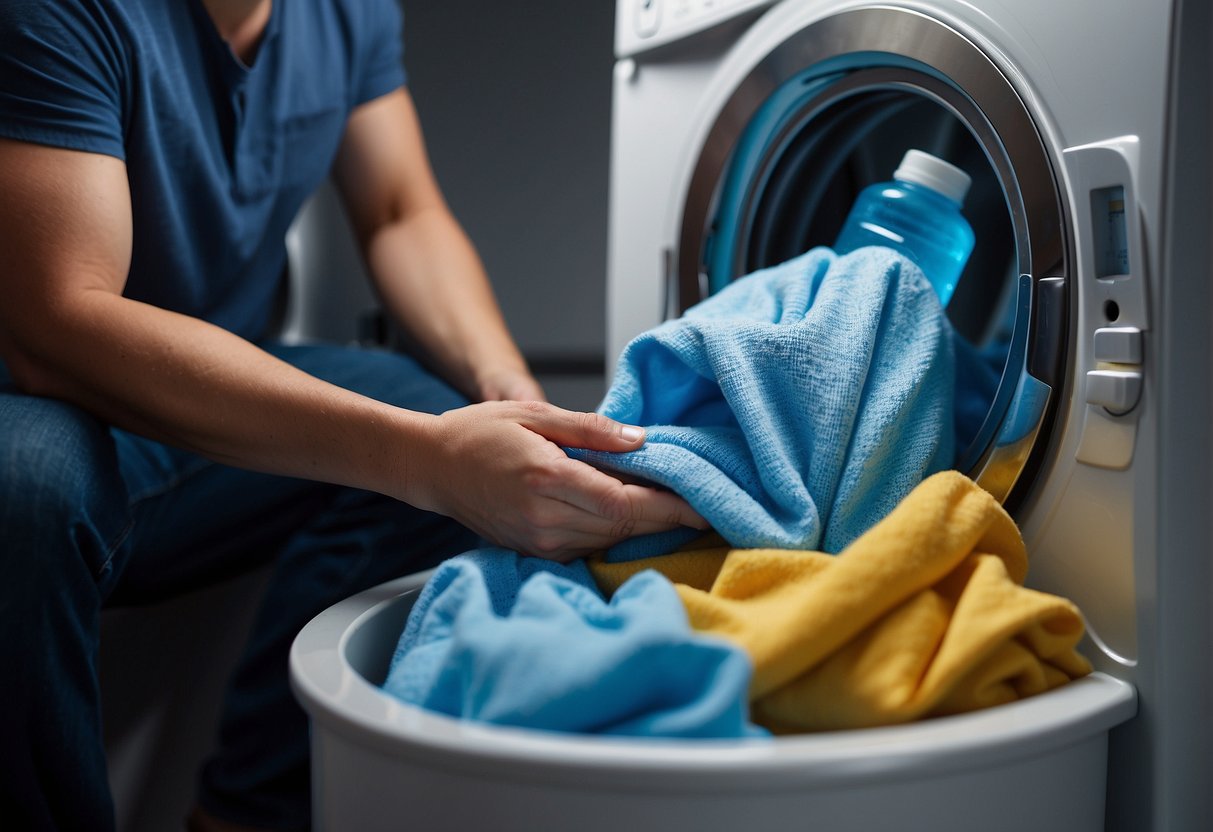
In the following section, you’ll find answers to common problems related to clothes remaining damp after a washing cycle and solutions to address these issues.
Why are my clothes not fully dry after the spin cycle?
Your washing machine’s spin cycle might not be operating correctly.
Often, this is caused by overloading the machine or an unbalanced load that prevents the washer from spinning at its optimal speed.
Check the user manual for the correct load size and rearrange your laundry evenly within the drum.
How can you dry clothes that come out soaked from the washer?
If clothes are soaked after the spin cycle, redistribute the load evenly (or remove some items) and run a drain and spin cycle again.
To manually dry your clothes, you can lay them flat on a clean towel, roll up the towel to absorb excess water, and then hang the clothes to air dry.
Alternatively, an indoor or outdoor drying rack can be effective, especially if you position the rack in a well-ventilated area or use a fan to circulate air.
What are common washer issues that lead to clothes remaining wet after washing?
Clothes can remain wet if there’s a problem with your washer’s drainage system. Clogs or kinks in the drain hose, a faulty pump, or a malfunctioning lid switch can prevent water from being expelled during the wash or spin cycle.
Regular maintenance checks and clearing out any obstructions can help prevent these issues. If problems persist, consider contacting a professional for repair or service.
Sources
- Washer: Clothes Still Wet After Spin Cycle is Complete, GE Appliances
- Laundering Problems & Solutions, American Cleaning Institute